

Everything's Coming Up Roses (and Japanese)
Sometimes it takes going halfway around the word to jumpstart what you’ve been intending to do for two years.

I recently arrived home from a two week trip to Japan. At the risk of sounding cliche, everything has changed. I am not talking about my newfound habit of a daily umeboshi plum, nor taking off my shoes at home. I am speaking of a fundamental change to the way I see the world.
Over a year ago, I designed the full brand identity for this project, Dinnertime. Due to something that sits between uncertainty and procrastination, I have been sitting on it ever since. This feeling comes in many forms: new job woes, late-night induced sleeping in, “am I on the right path” anxiety. My time in Japan gave me the clarity I needed to breathe, embrace silence, and move at the speed of self-trust.
I spend the majority of my day thinking of food in some capacity — cooking, eating, reading cookbooks and food memoirs, thinking of my next meal, daydreaming about ingredients. Meals are my preferred vehicle for connection, and it feels right to use them as a way to connect weekly with you.
Each week, I’ll share one Meal In and one Meal Out — a favorite home-cooked dish and a memorable meal that inspired me.
This first week’s Meal In is a Japanese-inspired version of a dish I return to often. In her memoir (and a favorite of mine), Always Home, Fanny Singer details her Coming Home Pasta — the meal waiting to greet you upon return from a long trip to an empty, strange-feeling house, the meal that sets about orienting your life back home. While this is not my “coming home” dish (broth-y cannellini beans that will be featured on a later date), it is a perfect candidate for first meal post-grocery shop.
This week’s Meal Out features a neighborhood favorite soba spot with my dream lunch special that instantly transported me back to Tokyo.
Meal In: Stewed Eggplant, Tomato, and Chickpeas with Kabocha Rice and Cold Brewed Sencha
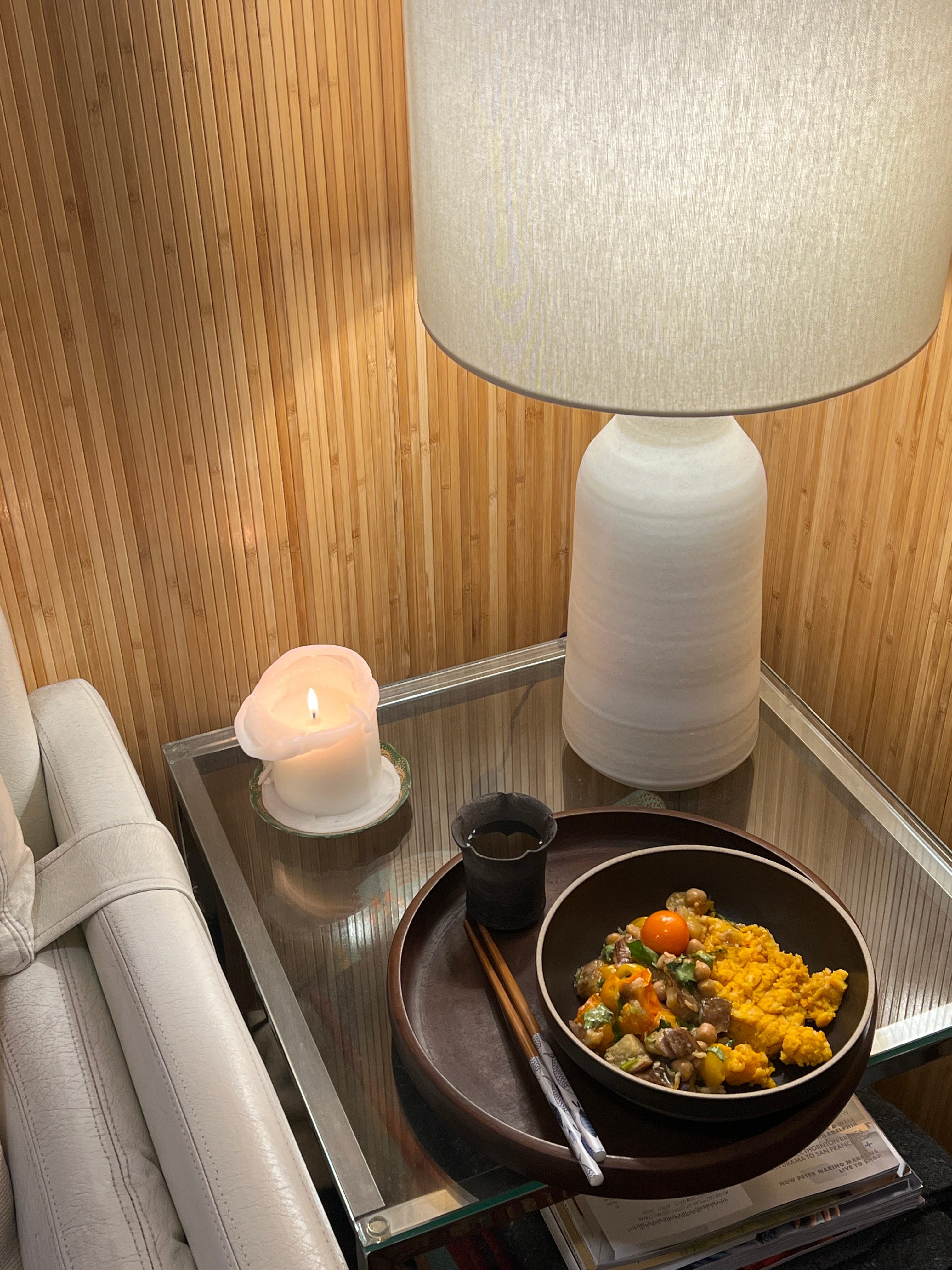
Eggplant, tomatoes, and chickpeas with kabocha rice served on a wooden tray from a antique store in Kyoto.
Eggplant has been on my mind since an outstanding lunch at Farmoon in Kyoto where we sat at the kitchen island while they prepared the eggplant for dinner that night. Arriving back in New York to the last farewells of summer, the first thing I wanted to eat were sungold tomatoes. I thought to cook a meal I make regularly: tomatoes, beans, and kale in a miso glaze with a lot of parsley. It made sense to me to add eggplant into the mix. As I laid out the ingredients, I was reminded of a recipe from Amy Chaplin’s cookbook, Whole Food Cooking Everyday, that is a similar roasted eggplant and tomato dish, with the inclusion of chickpeas.
Aforementioned eggplant prep at Farmoon.
When I was at the farmer’s market to pick up the tomatoes, I spotted kabocha squash. As I was picking it up, I ran into my neighbor who works for Norwich Meadows and he recommended I try the Red Zuri, a sweeter version of kabocha with a rich, red color. I went with this and used it to make a favorite from last winter, kabocha rice. To prepare it, I first steam the squash and then add it to the pot to cook with the rice as normal.
I prepped the eggplant and chopped it into one-inch pieces. I filled my dutch oven with a good glug of olive oil and let it begin to cook. While that was softening, I sliced half of the tomatoes in half and proceeded to make the sauce. I started with garlic and salt in the suribachi. Once broken down into a paste, I added grated ginger, chickpea miso, rice vinegar, olive oil, a little maple syrup, and a splash of water. The suribachi is my favorite tool for making dressings. I use a small whisk to combine once I have pounded down individual ingredients. Returning to the eggplant — once it was soft, I added the tomatoes, followed by the chickpeas. Once the halved tomatoes got jammy and all of the components were soft, I stirred in the sauce and finished it with a liberal amount of parsley.
When I bought hojicha at Kettl on Bowery a few months ago and mentioned my upcoming trip to Japan, they encouraged me to visit the producer, Ryuoen, in Kyoto. Ryuoen is a fabled tea producer who has been around since 1875. Upon arrival, you are ushered to sit on one of the stool facing a raised tatami, where the shopkeeper presents you with the daily choice of tea and a menu of their full offerings. The tea was a cold brew sencha. It was 100 degrees in Kyoto, and the cold brew was very welcome. I purchased some to brew at home and drank it with this meal.
Meal Out: Soba-ya
My dream meal: mini salmon donburi, cold soba, Japanese sweet potato, and pickled lotus root.
We had amazing Soba in a historic home in Tokyo, and it has been all I have wanted to eat ever since. Upon return back to New York, I had to get Soba-ya. Soba-ya is a favorite neighborhood restaurant on 9th St. with an amazing lunch special. When Spencer and I had lunch there a few days after our return, we saw an incredibly chic woman sitting at the bar, chopstick-held tempura in one hand and tea in the other, reading the New Yorker propped up in front of her. After a particularly long visit to the doctor’s office on a day off from work this week, I got lunch there again, sat at the bar in the same seat as her and propped up my current read (Nigel Slater’s A Thousand Feats).